Lupe’s legacy and CWEE’s early history
CWEE was inspired and modeled after National Women’s Employment and Education (NWEE), an early women’s empowerment and anti-poverty program in San Antonio founded by Lupe Anguiano. Lupe promoted a comprehensive skills training model that was highly unique for its time and incorporated supportive services and employer engagement.
When Lupe began this work in the late 1970s, it was clear that the current welfare system needed reform. At the time, welfare policies left very little room for achievement and advancement, making it difficult to make progress on goals while still receiving crucial support. These strict rules were written in a way that if someone accessing benefits earned even a dollar over income limits, they would lose all benefits such as food stamps, child care assistance, and health insurance. This resulted in a system that stagnated self-sufficiency instead of encouraging it.
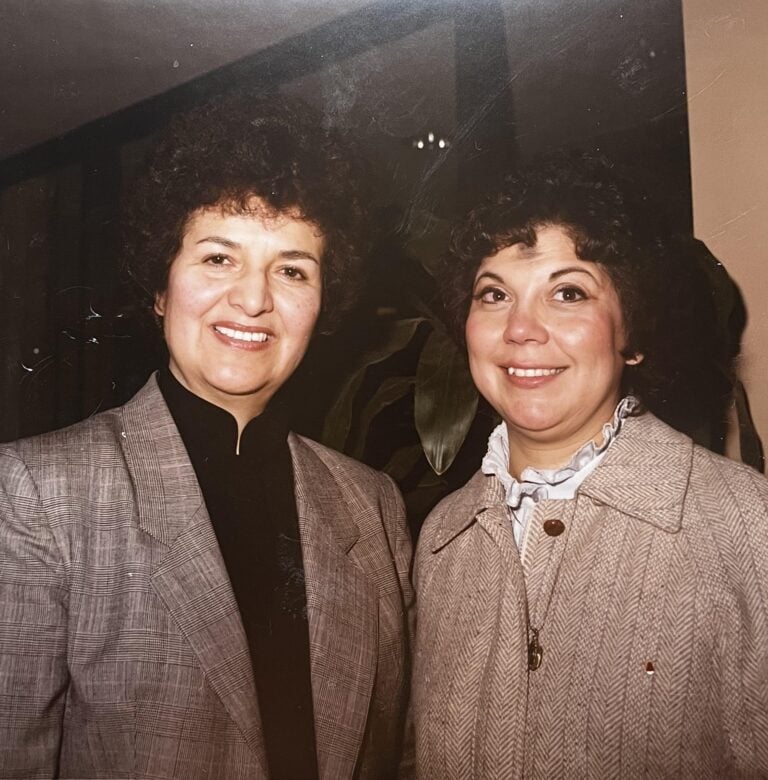
Sen. Polly Baca (pictured above right with Lupe Anguiano) was a member of the NWEE Board of Directors. Polly introduced her friend Jackie Jaramillo, CWEE’s first CEO, to the mission and work that Lupe was doing in Texas. At the time, Jackie was working in the administration of Colorado Gov. Dick Lamm, and she was determined to bring the NWEE model to Colorado. She pitched her idea to Gov. Lamm, which was to make the state departments of labor and employment and human services work together to create pathways to vocational training, education and jobs for women on welfare.
The departments of human services and labor and employment weren’t fond of this idea and Gov. Lamm advised Jackie that the program didn’t belong in government. She decided to pursue a grassroots and private sector approach to reforming the welfare system. There was a tremendous need for entry-level workers at that time, and employers were desperate to limit turnover. Lupe had created a curriculum and a model of employer engagement that helped people identify their strengths and integrate themselves into the workforce. Jackie set about replicating the model in Denver.
Jackie resigned her position with the Governor’s Office and launched CWEE in 1982. The first person she hired was an instructor, Laurie Harvey. Laurie would go on to follow Jackie as CEO and serve in the position for more than 30 years. In 1985, Gloria Steinem came to CWEE to speak at an event. Below Steinem is pictured in the front row, center, with Jackie and Laurie on either side.

Anita Martin, an early CWEE participant, was the first woman to be placed in nontraditional employment, which set CWEE on a path to help more women enter these fields. Anita was hired at $25 hour in 1985. Once she earned her journeyman license, she worked as a pipefitter for $40+ per hour (that’s $123/hour today adjusting for inflation). Below her photo is an excerpt of Anita’s story from nearly 40 years ago.
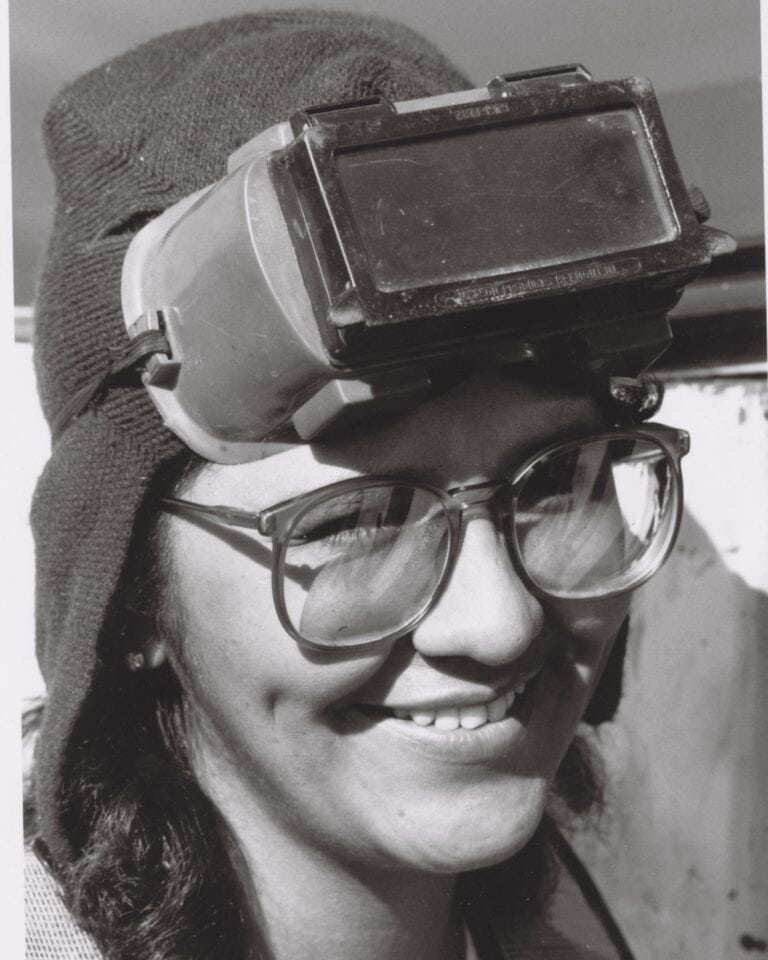
The youngest of 13 children, Anita’s role model was her father. He worked at Gates Rubber Company and two other construction jobs to support his family. Anita remembers enjoying tagging along with him, especially if his work involved trucks, heavy equipment and outdoor duties. Anita’s life changed after she met a man who physically abused her and stole her hard-earned money.
When she became pregnant, Anita quit her job to take care of her baby. Her boyfriend left, but Anita was too proud to seek help from her family, and she had to accept welfare to survive. She and the baby lived in public housing “with no furniture but lots of cockroaches.”
After graduating from CWEE’s three-week program, CWEE helped her get an interview with Public Service Company of Colorado, and Anita was accepted into their apprentice program for journeymen pipefitters. Anita was the only woman in the four-year training program.
“Physical work pays better than a desk job, and you can always wash off the dirt,” she said.
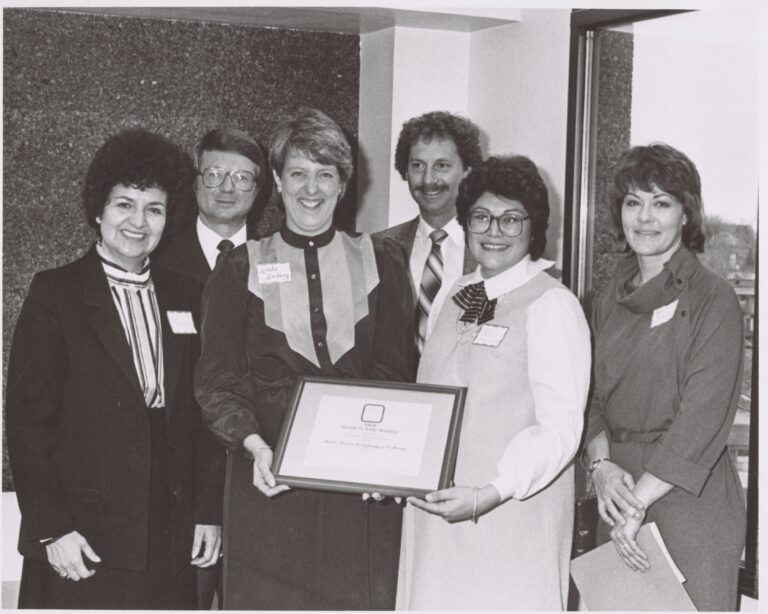
Behind the scenes, Jackie, Lupe, NWEE, CWEE and many other individuals and organizations were advocating for comprehensive welfare reform that offered more pathways to opportunity. Jackie worked tirelessly to elevate the issue of welfare reform in policy, as well as within feminist circles and the advancing Chicano rights movement.
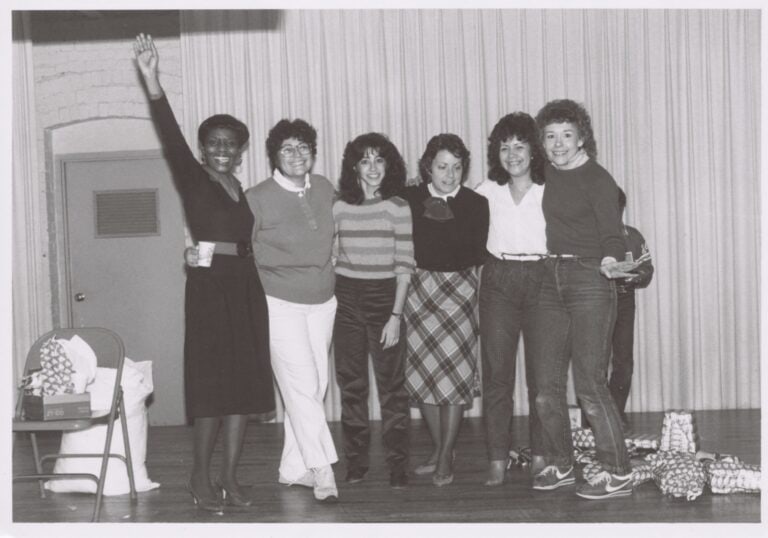
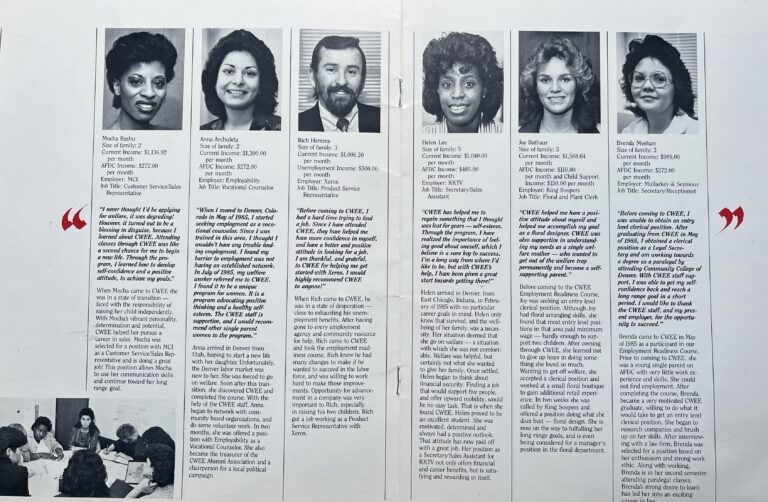
In 1989, Jackie left CWEE and Laurie Harvey became CWEE’s CEO. Four years later, President Bill Clinton signed a comprehensive welfare reform package into law. This landmark legislation included many of Lupe Anguiano’s ideas. CWEE’s early staff team is pictured above in 1983, including Zenzal Carr (far left) and Laurie Harvey (third from right). Below are testimonials from participants featured in CWEE’s 1985 annual report.